
Traditional neon lights are not LED lights. Many people refer to traditional neon lights as true neon lights, but these are not LED lights. Their light-emitting principle is that of a cold cathode gas discharge lamp. Rare gases (such as neon or argon) within a sealed glass tube are ionized under high voltage to emit light. For example, neon emits orange-red light, and argon emits blue light.
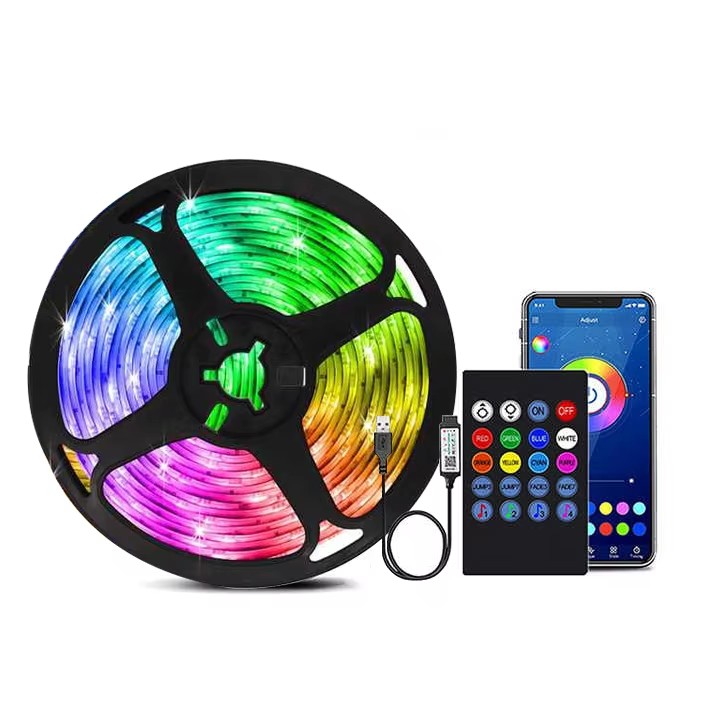
Many flexible LED neon lights can now replace traditional neon lights, and many people also call them neon lights. While the light-emitting effect is similar, the light-emitting principle is completely different. These flexible LED neon lights are LED lights.
Traditional neon lights are gradually being replaced, and the number of manufacturers producing traditional neon lights is decreasing significantly.

Comparison of LED Flexible Neon Lights and Traditional Neon Lights
I. Voltage Comparison
Traditional Neon Lights: Require glass tubes, rare gases, and high-voltage electrodes (operating voltage up to 15,000V). They are large and fragile, with poor high-voltage safety, especially outdoors.
LED Flexible Neon Lights: Use solid-state light-emitting diodes (LEDs). They have a compact structure and are highly shock-resistant. Voltages include 5V, 12V, and 24V, allowing for lower voltage operation and greater safety.
II. Lifespan and Performance Comparison
Energy Efficiency and Lifespan: LED lights have a lifespan of up to 100,000 hours, consuming less than 1/3 the power of traditional neon lights.
Color Control: Traditional neon light colors are determined by the type of gas (fixed). LED flexible neon lights can achieve dynamic color changes through the mixing of three colors.
Environmental Protection: LEDs do not contain harmful substances such as mercury, while neon lights require high voltage operation and contain rare gases.
Currently, advertising companies widely use LED flexible neon lights for billboards.